Buy lösungen.eu ?
We are moving the project
lösungen.eu .
Are you interested in purchasing the domain
lösungen.eu ?
domain@kv-gmbh.de · 0541-91531010
Buy lösungen.eu ?
How are hybrid orbitals and molecular orbitals related?
Hybrid orbitals and molecular orbitals are related in that hybrid orbitals are a combination of atomic orbitals that form when atoms bond to create a molecule. These hybrid orbitals then overlap with each other and with other atomic orbitals to form molecular orbitals, which describe the distribution of electrons in a molecule. In other words, hybrid orbitals are the building blocks that contribute to the formation of molecular orbitals, which ultimately determine the bonding and structure of a molecule. **
What are antibonding orbitals?
Antibonding orbitals are molecular orbitals that have higher energy than the corresponding bonding orbitals. They result from the destructive interference of atomic orbitals when they combine to form a molecule. Electrons in antibonding orbitals destabilize the molecule and weaken the bond strength between the atoms. Antibonding orbitals are denoted with an asterisk (*) symbol, such as σ* or π*. **

Similar search terms for Orbitals
Top-Angebote
Products related to Orbitals:
-
La Prairie Skin Caviar Essence-In-Lotion moisturising serum with rejuvenating effect innovation 150 mlLa Prairie Skin Caviar Essence-In-Lotion, 150 ml, Skin Serums for Women, Does it feel as though your skin needs something more than just the care provided by a cream? The La Prairie Skin Caviar Essence-In-Lotion facial serum is the perfect product to enrich your skincare routine – it pampers the skin and delivers an intensive treatment. With its high concentration of active ingredients, the effect it has on your skin is far more pronounced and faster than with a face cream. Its liquid consistency makes application easier, as it is absorbed into the skin very well. Characteristics: restores skin elasticity hydrates and nourishes effectively199,75 £*Shipping: 3,99 £Secure redirect to the provider
-
Pan Make Brilliant Work: Lessons on Creativity, Innovation and Success by Rod Judkins - Paperback - Self-Help/Business Creativity Guide, Author ofMake Brilliant Work is an inspiring guide by Rod Judkins, drawing on the real-life stories of visionaries from Frida Kahlo to Steve Jobs. This paperback book reveals the methods and mindsets that turn ordinary effort into extraordinary results. Judkins proves that talent alone never guaranteed success — persistence, risk-taking and original thinking did. A motivating read for anyone wanting to unlock their creative potential at work or in life. The book profiles figures who failed at school, were told they lacked talent, or were fired more than once, yet went on to achieve great things. Written by Rod Judkins, published by Pan Macmillan, this book is a reassuring truth: you don't have to be naturally brilliant to produce brilliant work.2,99 £*Shipping: 2,99 £Secure redirect to the provider


-
What are orbitals 2?
Orbitals are regions in an atom where electrons are likely to be found. Orbitals are described by quantum mechanics and have specific shapes and orientations. Orbitals are labeled by their energy level (n) and sublevel (s, p, d, f), and each sublevel contains a specific number of orbitals with different shapes. For example, the second energy level (n=2) contains an s orbital and three p orbitals, each with a different orientation in space. **
-
What are molecular orbitals?
Molecular orbitals are regions of space around a molecule where the probability of finding an electron is high. They are formed by the combination of atomic orbitals from the individual atoms in the molecule. Molecular orbitals can be bonding, anti-bonding, or non-bonding, and they play a crucial role in determining the electronic structure and properties of molecules. The interaction of these molecular orbitals determines the stability and reactivity of the molecule. **
-
Can you sketch atomic orbitals?
As a language model AI, I cannot physically sketch atomic orbitals. However, I can describe them. Atomic orbitals are regions of space around the nucleus of an atom where an electron is likely to be found. They are represented as three-dimensional shapes, such as spheres, dumbbells, and other more complex shapes, which correspond to the probability of finding an electron at a particular location within the orbital. These shapes are determined by the quantum numbers that describe the energy, shape, and orientation of the orbitals. **
-
Why does the building principle require more energy for 3d orbitals than for 4s orbitals?
The building principle requires more energy for 3d orbitals than for 4s orbitals because the 3d orbitals have a higher energy level than the 4s orbitals. This is due to the different shapes and orientations of the orbitals. The 3d orbitals have more complex shapes and orientations, which require more energy to fill and stabilize. Additionally, the 4s orbital is closer to the nucleus, which results in a lower energy level compared to the 3d orbitals. **
How do I recognize the orbitals?
Orbitals can be recognized by their shape and orientation in space. There are different types of orbitals, such as s, p, d, and f orbitals, each with a distinct shape. For example, s orbitals are spherical, p orbitals are dumbbell-shaped, and d orbitals have more complex shapes. Additionally, orbitals are often represented graphically in diagrams or models to help visualize their structure. **
How do I start learning orbitals?
To start learning about orbitals, it is important to have a basic understanding of atomic structure and quantum mechanics. You can begin by studying the different types of orbitals (s, p, d, f) and their shapes, as well as their energy levels and electron configurations. There are many resources available online, such as textbooks, videos, and online courses, that can help you learn about orbitals in more detail. It is also helpful to practice solving problems and working through examples to solidify your understanding of orbitals. **
Top-Angebote
Products related to Orbitals:
-
Kepler Interactive Orbitals for Nintendo Switch 2 - Two-Player Cooperative Game - Ages 7+Explore the stars together in Orbitals. Join Maki and Omura in a colourful intergalactic adventure designed for two-player cooperation. Their space-station home is trapped within a supernatural cosmic storm, and the pair must journey beyond the Storm Wall to find the help needed to save it. Teamwork is essential in Orbitals, which combines asymmetric puzzles, exploration, and action, giving each player distinct tools and responsibilities. Work together to open routes, overcome hazards, and navigate mysterious abandoned stations. The game features a retro anime presentation with cinematic sequences produced by Studio Massket, and a voiced story with English and Japanese voice acting. Play locally using split-screen or team up online through supported Nintendo Switch features. Orbitals is supplied on a Nintendo Switch game cartridge.39,29 £*Shipping: 3,95 £Secure redirect to the provider
-
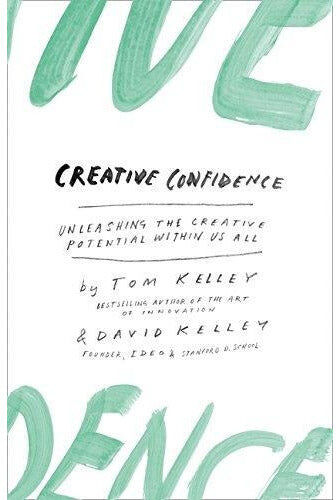
HARPERCOLLINS Creative Confidence by Tom & David Kelley – Unleashing Your Creative Potential & Innovation MindsetA powerful and inspiring book from the founders of IDEO, the award-winning design firm, on unleashing the creativity that lies within each and every one of us. Too often, companies and individuals assume that creativity and innovation are the domain of the ‘creative types’. But two of the foremost experts in innovation, design and creativity on the planet show us that each and every one of us is creative. In an entertaining and inspiring narrative that draws on countless stories from their work at IDEO, and with many of the world's top companies and design firms, David and Tom Kelley identify the principles and strategies that will allow us to tap into our creative potential in our work lives, and in our personal lives, allow us to think outside the box in terms of how we approach and solve problems. ‘Creative Confidence’ is a book that will help each of us be more productive and successful in our lives and in our careers.4,95 £*Shipping: 1,99 £Secure redirect to the provider
-
La Prairie Skin Caviar Essence-In-Lotion moisturising serum with rejuvenating effect innovation 150 mlLa Prairie Skin Caviar Essence-In-Lotion, 150 ml, Skin Serums for Women, Does it feel as though your skin needs something more than just the care provided by a cream? The La Prairie Skin Caviar Essence-In-Lotion facial serum is the perfect product to enrich your skincare routine – it pampers the skin and delivers an intensive treatment. With its high concentration of active ingredients, the effect it has on your skin is far more pronounced and faster than with a face cream. Its liquid consistency makes application easier, as it is absorbed into the skin very well. Characteristics: restores skin elasticity hydrates and nourishes effectively199,75 £*Shipping: 3,99 £Secure redirect to the provider
-
Pan Make Brilliant Work: Lessons on Creativity, Innovation and Success by Rod Judkins - Paperback - Self-Help/Business Creativity Guide, Author ofMake Brilliant Work is an inspiring guide by Rod Judkins, drawing on the real-life stories of visionaries from Frida Kahlo to Steve Jobs. This paperback book reveals the methods and mindsets that turn ordinary effort into extraordinary results. Judkins proves that talent alone never guaranteed success — persistence, risk-taking and original thinking did. A motivating read for anyone wanting to unlock their creative potential at work or in life. The book profiles figures who failed at school, were told they lacked talent, or were fired more than once, yet went on to achieve great things. Written by Rod Judkins, published by Pan Macmillan, this book is a reassuring truth: you don't have to be naturally brilliant to produce brilliant work.2,99 £*Shipping: 2,99 £Secure redirect to the provider
-
How are hybrid orbitals and molecular orbitals related?
Hybrid orbitals and molecular orbitals are related in that hybrid orbitals are a combination of atomic orbitals that form when atoms bond to create a molecule. These hybrid orbitals then overlap with each other and with other atomic orbitals to form molecular orbitals, which describe the distribution of electrons in a molecule. In other words, hybrid orbitals are the building blocks that contribute to the formation of molecular orbitals, which ultimately determine the bonding and structure of a molecule. **
-
What are antibonding orbitals?
Antibonding orbitals are molecular orbitals that have higher energy than the corresponding bonding orbitals. They result from the destructive interference of atomic orbitals when they combine to form a molecule. Electrons in antibonding orbitals destabilize the molecule and weaken the bond strength between the atoms. Antibonding orbitals are denoted with an asterisk (*) symbol, such as σ* or π*. **
-
What are orbitals 2?
Orbitals are regions in an atom where electrons are likely to be found. Orbitals are described by quantum mechanics and have specific shapes and orientations. Orbitals are labeled by their energy level (n) and sublevel (s, p, d, f), and each sublevel contains a specific number of orbitals with different shapes. For example, the second energy level (n=2) contains an s orbital and three p orbitals, each with a different orientation in space. **
-
What are molecular orbitals?
Molecular orbitals are regions of space around a molecule where the probability of finding an electron is high. They are formed by the combination of atomic orbitals from the individual atoms in the molecule. Molecular orbitals can be bonding, anti-bonding, or non-bonding, and they play a crucial role in determining the electronic structure and properties of molecules. The interaction of these molecular orbitals determines the stability and reactivity of the molecule. **
Similar search terms for Orbitals
-
Can you sketch atomic orbitals?
As a language model AI, I cannot physically sketch atomic orbitals. However, I can describe them. Atomic orbitals are regions of space around the nucleus of an atom where an electron is likely to be found. They are represented as three-dimensional shapes, such as spheres, dumbbells, and other more complex shapes, which correspond to the probability of finding an electron at a particular location within the orbital. These shapes are determined by the quantum numbers that describe the energy, shape, and orientation of the orbitals. **
-
Why does the building principle require more energy for 3d orbitals than for 4s orbitals?
The building principle requires more energy for 3d orbitals than for 4s orbitals because the 3d orbitals have a higher energy level than the 4s orbitals. This is due to the different shapes and orientations of the orbitals. The 3d orbitals have more complex shapes and orientations, which require more energy to fill and stabilize. Additionally, the 4s orbital is closer to the nucleus, which results in a lower energy level compared to the 3d orbitals. **
-
How do I recognize the orbitals?
Orbitals can be recognized by their shape and orientation in space. There are different types of orbitals, such as s, p, d, and f orbitals, each with a distinct shape. For example, s orbitals are spherical, p orbitals are dumbbell-shaped, and d orbitals have more complex shapes. Additionally, orbitals are often represented graphically in diagrams or models to help visualize their structure. **
-
How do I start learning orbitals?
To start learning about orbitals, it is important to have a basic understanding of atomic structure and quantum mechanics. You can begin by studying the different types of orbitals (s, p, d, f) and their shapes, as well as their energy levels and electron configurations. There are many resources available online, such as textbooks, videos, and online courses, that can help you learn about orbitals in more detail. It is also helpful to practice solving problems and working through examples to solidify your understanding of orbitals. **
* All prices are inclusive of VAT and, if applicable, plus shipping costs. The offer information is based on the details provided by the respective shop and is updated through automated processes. Real-time updates do not occur, so deviations can occur in individual cases. ** Note: Parts of this content were created by AI.