Buy lösungen.eu ?
We are moving the project
lösungen.eu .
Are you interested in purchasing the domain
lösungen.eu ?
domain@kv-gmbh.de · 0541-91531010
Buy lösungen.eu ?
Is "müssen" a noun?
No, "müssen" is not a noun. It is a modal verb in German that means "must" or "have to." Modal verbs are used to express necessity, obligation, or possibility in a sentence. **
Is anger a noun?
Yes, anger is a noun. It is a feeling or emotion that can be experienced by a person. As a noun, anger refers to the strong feeling of displeasure or hostility towards someone or something. It is a common human emotion that can vary in intensity and duration. **

Similar search terms for Noun
Top-Angebote
Products related to Noun:
-
Pan Make Brilliant Work: Lessons on Creativity, Innovation and Success by Rod Judkins - Paperback - Self-Help/Business Creativity Guide, Author ofMake Brilliant Work is an inspiring guide by Rod Judkins, drawing on the real-life stories of visionaries from Frida Kahlo to Steve Jobs. This paperback book reveals the methods and mindsets that turn ordinary effort into extraordinary results. Judkins proves that talent alone never guaranteed success — persistence, risk-taking and original thinking did. A motivating read for anyone wanting to unlock their creative potential at work or in life. The book profiles figures who failed at school, were told they lacked talent, or were fired more than once, yet went on to achieve great things. Written by Rod Judkins, published by Pan Macmillan, this book is a reassuring truth: you don't have to be naturally brilliant to produce brilliant work.2,99 £*Shipping: 2,99 £Secure redirect to the provider

-
Is "Rot" a noun?
Yes, "Rot" is a noun. It refers to the process of decay or decomposition in organic matter. **
-
How do I recognize a masculine noun and a feminine noun in French?
In French, the gender of a noun is not always predictable and can vary from word to word. However, there are some general rules to help recognize the gender of a noun. One common rule is that nouns ending in -e are often feminine, while those ending in other letters are often masculine. Additionally, nouns referring to male people or animals are usually masculine, while those referring to female people or animals are usually feminine. However, it's important to note that there are many exceptions to these rules, and the gender of a noun often needs to be learned and memorized along with the word itself. **
-
How can I recognize a masculine noun and a feminine noun in French?
In French, one way to recognize a masculine noun is by looking at the article that precedes it. Masculine nouns are usually preceded by the articles "le" (singular) or "les" (plural). On the other hand, feminine nouns are typically preceded by the articles "la" (singular) or "les" (plural). Additionally, many feminine nouns end in the letter "e," while masculine nouns often do not. It is important to remember that there are exceptions to these rules, so it is helpful to learn the gender of nouns along with their respective articles. **
-
Is a name a noun?
Yes, a name is a noun. In grammar, a noun is a word that represents a person, place, thing, or idea. Names are used to identify specific people, places, or things, making them a type of noun. For example, "John" is a name representing a person, "Paris" is a name representing a place, and "book" is a noun representing a thing. **
Which word is a noun?
The word "apple" is a noun. **
What color is a noun?
A noun does not have a specific color as it is a part of speech used to identify a person, place, thing, or idea. **
Top-Angebote
Products related to Noun:
-
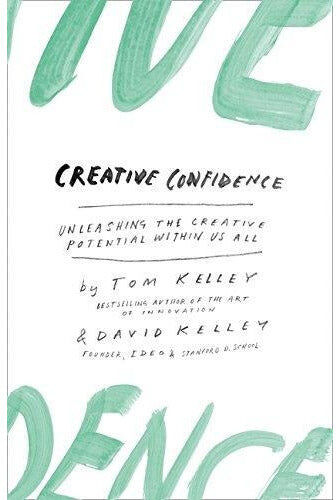
HARPERCOLLINS Creative Confidence by Tom & David Kelley – Unleashing Your Creative Potential & Innovation MindsetA powerful and inspiring book from the founders of IDEO, the award-winning design firm, on unleashing the creativity that lies within each and every one of us. Too often, companies and individuals assume that creativity and innovation are the domain of the ‘creative types’. But two of the foremost experts in innovation, design and creativity on the planet show us that each and every one of us is creative. In an entertaining and inspiring narrative that draws on countless stories from their work at IDEO, and with many of the world's top companies and design firms, David and Tom Kelley identify the principles and strategies that will allow us to tap into our creative potential in our work lives, and in our personal lives, allow us to think outside the box in terms of how we approach and solve problems. ‘Creative Confidence’ is a book that will help each of us be more productive and successful in our lives and in our careers.4,95 £*Shipping: 1,99 £Secure redirect to the provider
-
La Prairie Skin Caviar Essence-In-Lotion moisturising serum with rejuvenating effect innovation 150 mlLa Prairie Skin Caviar Essence-In-Lotion, 150 ml, Skin Serums for Women, Does it feel as though your skin needs something more than just the care provided by a cream? The La Prairie Skin Caviar Essence-In-Lotion facial serum is the perfect product to enrich your skincare routine – it pampers the skin and delivers an intensive treatment. With its high concentration of active ingredients, the effect it has on your skin is far more pronounced and faster than with a face cream. Its liquid consistency makes application easier, as it is absorbed into the skin very well. Characteristics: restores skin elasticity hydrates and nourishes effectively199,75 £*Shipping: 3,99 £Secure redirect to the provider
-
Pan Make Brilliant Work: Lessons on Creativity, Innovation and Success by Rod Judkins - Paperback - Self-Help/Business Creativity Guide, Author ofMake Brilliant Work is an inspiring guide by Rod Judkins, drawing on the real-life stories of visionaries from Frida Kahlo to Steve Jobs. This paperback book reveals the methods and mindsets that turn ordinary effort into extraordinary results. Judkins proves that talent alone never guaranteed success — persistence, risk-taking and original thinking did. A motivating read for anyone wanting to unlock their creative potential at work or in life. The book profiles figures who failed at school, were told they lacked talent, or were fired more than once, yet went on to achieve great things. Written by Rod Judkins, published by Pan Macmillan, this book is a reassuring truth: you don't have to be naturally brilliant to produce brilliant work.2,99 £*Shipping: 2,99 £Secure redirect to the provider
-
Is "müssen" a noun?
No, "müssen" is not a noun. It is a modal verb in German that means "must" or "have to." Modal verbs are used to express necessity, obligation, or possibility in a sentence. **
-
Is anger a noun?
Yes, anger is a noun. It is a feeling or emotion that can be experienced by a person. As a noun, anger refers to the strong feeling of displeasure or hostility towards someone or something. It is a common human emotion that can vary in intensity and duration. **
-
Is "Rot" a noun?
Yes, "Rot" is a noun. It refers to the process of decay or decomposition in organic matter. **
-
How do I recognize a masculine noun and a feminine noun in French?
In French, the gender of a noun is not always predictable and can vary from word to word. However, there are some general rules to help recognize the gender of a noun. One common rule is that nouns ending in -e are often feminine, while those ending in other letters are often masculine. Additionally, nouns referring to male people or animals are usually masculine, while those referring to female people or animals are usually feminine. However, it's important to note that there are many exceptions to these rules, and the gender of a noun often needs to be learned and memorized along with the word itself. **
Similar search terms for Noun
-
How can I recognize a masculine noun and a feminine noun in French?
In French, one way to recognize a masculine noun is by looking at the article that precedes it. Masculine nouns are usually preceded by the articles "le" (singular) or "les" (plural). On the other hand, feminine nouns are typically preceded by the articles "la" (singular) or "les" (plural). Additionally, many feminine nouns end in the letter "e," while masculine nouns often do not. It is important to remember that there are exceptions to these rules, so it is helpful to learn the gender of nouns along with their respective articles. **
-
Is a name a noun?
Yes, a name is a noun. In grammar, a noun is a word that represents a person, place, thing, or idea. Names are used to identify specific people, places, or things, making them a type of noun. For example, "John" is a name representing a person, "Paris" is a name representing a place, and "book" is a noun representing a thing. **
-
Which word is a noun?
The word "apple" is a noun. **
-
What color is a noun?
A noun does not have a specific color as it is a part of speech used to identify a person, place, thing, or idea. **
* All prices are inclusive of VAT and, if applicable, plus shipping costs. The offer information is based on the details provided by the respective shop and is updated through automated processes. Real-time updates do not occur, so deviations can occur in individual cases. ** Note: Parts of this content were created by AI.