Buy lösungen.eu ?
We are moving the project
lösungen.eu .
Are you interested in purchasing the domain
lösungen.eu ?
domain@kv-gmbh.de · 0541-91531010
Buy lösungen.eu ?
What is the difference between ionizing and non-ionizing radiation?
Ionizing radiation has enough energy to remove tightly bound electrons from atoms, creating ions. This type of radiation includes X-rays, gamma rays, and some forms of ultraviolet radiation. Non-ionizing radiation, on the other hand, does not have enough energy to remove electrons from atoms, and includes forms of radiation such as visible light, radio waves, and microwaves. The main difference between the two is the amount of energy they carry and their ability to ionize atoms. **
Who discovered ionizing radiation?
Ionizing radiation was discovered by Wilhelm Conrad Roentgen in 1895. While experimenting with cathode rays, he noticed that a fluorescent screen in his lab would glow even when it was not directly in the path of the rays. This led him to the discovery of X-rays, which are a form of ionizing radiation. Roentgen's discovery revolutionized the field of medicine and earned him the first Nobel Prize in Physics in 1901. **


Similar search terms for Ionizing
Top-Angebote
Products related to Ionizing:
-
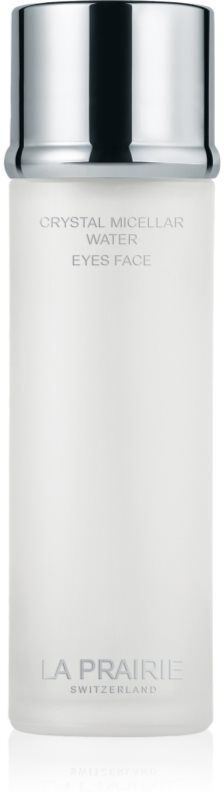
La Prairie Crystal Micellar Water makeup removing micellar water for face and eyes innovation 150 mlLa Prairie Crystal Micellar Water, 150 ml, Micellar Waters for Women, The La PrairieCrystal Micellar Water micellar water is enriched with tiny active particles that bind to any impurities and sebum on contact with the skin. Thanks to these particles, called micelles, this water ensures thorough foundation removal in a few minutes and without the need for pressure or friction on the skin. The micelles are so effective that they can handle even the most stubborn waterproof foundation. Characteristics: cleans pores deeply removes even stubborn makeup keeps skin balanced How to use: Apply enough of the product to a cotton wool pad and wipe gently to remove makeup and clean the skin. Use in the morning and evening or as needed. Shake well before use.99,45 £*Shipping: 3,99 £Secure redirect to the provider
-
HarperCollins Creative Confidence by David Kelley & Tom Kelley - IDEO Design Thinking Guide - Paperback - Business & Innovation Non Fiction BookDevelop your creative potential with this paperback edition of 'Creative Confidence' by David Kelley. The book, published by HarperCollins, argues that creativity is a skill anyone can build, not a rare gift reserved for a few. Drawing on decades of experience helping companies innovate, the authors share practical tools for turning doubt into confident action. This book sets out to demolish the myth that creativity belongs only to 'creative types' and offers real-world advice for anyone looking to boost their creative skills.4,99 £*Shipping: 2,99 £Secure redirect to the provider
-
Pan Make Brilliant Work: Lessons on Creativity, Innovation and Success by Rod Judkins - Paperback - Self-Help/Business Creativity Guide, Author ofMake Brilliant Work is an inspiring guide by Rod Judkins, drawing on the real-life stories of visionaries from Frida Kahlo to Steve Jobs. This paperback book reveals the methods and mindsets that turn ordinary effort into extraordinary results. Judkins proves that talent alone never guaranteed success — persistence, risk-taking and original thinking did. A motivating read for anyone wanting to unlock their creative potential at work or in life. The book profiles figures who failed at school, were told they lacked talent, or were fired more than once, yet went on to achieve great things. Written by Rod Judkins, published by Pan Macmillan, this book is a reassuring truth: you don't have to be naturally brilliant to produce brilliant work.2,99 £*Shipping: 2,99 £Secure redirect to the provider


-
What professions involve working with ionizing radiation?
Professions that involve working with ionizing radiation include radiologic technologists, nuclear medicine technologists, radiation therapists, and radiologists. These professionals use ionizing radiation in various medical imaging and treatment procedures. Other professions that may involve working with ionizing radiation include nuclear engineers, physicists, and researchers in the field of nuclear energy. **
-
When and why does ionizing radiation occur?
Ionizing radiation occurs when an atom undergoes a process that causes it to lose or gain electrons, resulting in the formation of charged particles called ions. This can happen through natural processes such as radioactive decay of certain elements, or through human activities such as medical imaging and nuclear power generation. Ionizing radiation is harmful to living organisms because it can damage cells and DNA, leading to potential health risks such as cancer and genetic mutations. **
-
Does beta-plus radiation belong to ionizing radiation?
Yes, beta-plus radiation belongs to ionizing radiation. Beta-plus radiation consists of positrons, which are positively charged particles that have the ability to ionize atoms by knocking off electrons from their orbits. This process can lead to the formation of charged particles and free radicals, which can cause damage to biological tissues and DNA. Therefore, beta-plus radiation is considered a form of ionizing radiation due to its ability to ionize atoms and cause biological damage. **
-
When do different types of ionizing radiation occur?
Different types of ionizing radiation occur in various situations. For example, alpha radiation occurs during the decay of heavy elements such as uranium or radium. Beta radiation occurs during the decay of certain unstable isotopes, while gamma radiation is emitted during nuclear reactions and radioactive decay. X-rays are produced during high-energy processes such as in medical imaging or industrial applications. Each type of ionizing radiation has its own specific source and characteristics. **
What professions are there that deal with ionizing radiation?
Professions that deal with ionizing radiation include radiologic technologists, radiation therapists, nuclear medicine technologists, radiologists, medical physicists, and nuclear engineers. These professionals work in various settings such as hospitals, diagnostic imaging centers, research facilities, and nuclear power plants. They are trained to safely handle and use ionizing radiation for medical diagnosis and treatment, as well as for industrial and energy production purposes. **
What is ionizing radiation in short and concise form?
Ionizing radiation is a type of energy that has enough power to remove tightly bound electrons from atoms, creating charged particles (ions) in the process. This can cause damage to living cells and genetic material, leading to potential health risks such as cancer and radiation sickness. Sources of ionizing radiation include X-rays, gamma rays, and radioactive materials. **
Top-Angebote
Products related to Ionizing:
-
HARPERCOLLINS Creative Confidence by Tom & David Kelley – Unleashing Your Creative Potential & Innovation MindsetA powerful and inspiring book from the founders of IDEO, the award-winning design firm, on unleashing the creativity that lies within each and every one of us. Too often, companies and individuals assume that creativity and innovation are the domain of the ‘creative types’. But two of the foremost experts in innovation, design and creativity on the planet show us that each and every one of us is creative. In an entertaining and inspiring narrative that draws on countless stories from their work at IDEO, and with many of the world's top companies and design firms, David and Tom Kelley identify the principles and strategies that will allow us to tap into our creative potential in our work lives, and in our personal lives, allow us to think outside the box in terms of how we approach and solve problems. ‘Creative Confidence’ is a book that will help each of us be more productive and successful in our lives and in our careers.4,95 £*Shipping: 1,99 £Secure redirect to the provider
-
La Prairie Skin Caviar Essence-In-Lotion moisturising serum with rejuvenating effect innovation 150 mlLa Prairie Skin Caviar Essence-In-Lotion, 150 ml, Skin Serums for Women, Does it feel as though your skin needs something more than just the care provided by a cream? The La Prairie Skin Caviar Essence-In-Lotion facial serum is the perfect product to enrich your skincare routine – it pampers the skin and delivers an intensive treatment. With its high concentration of active ingredients, the effect it has on your skin is far more pronounced and faster than with a face cream. Its liquid consistency makes application easier, as it is absorbed into the skin very well. Characteristics: restores skin elasticity hydrates and nourishes effectively199,75 £*Shipping: 3,99 £Secure redirect to the provider
-
La Prairie Crystal Micellar Water makeup removing micellar water for face and eyes innovation 150 mlLa Prairie Crystal Micellar Water, 150 ml, Micellar Waters for Women, The La PrairieCrystal Micellar Water micellar water is enriched with tiny active particles that bind to any impurities and sebum on contact with the skin. Thanks to these particles, called micelles, this water ensures thorough foundation removal in a few minutes and without the need for pressure or friction on the skin. The micelles are so effective that they can handle even the most stubborn waterproof foundation. Characteristics: cleans pores deeply removes even stubborn makeup keeps skin balanced How to use: Apply enough of the product to a cotton wool pad and wipe gently to remove makeup and clean the skin. Use in the morning and evening or as needed. Shake well before use.99,45 £*Shipping: 3,99 £Secure redirect to the provider
-
HarperCollins Creative Confidence by David Kelley & Tom Kelley - IDEO Design Thinking Guide - Paperback - Business & Innovation Non Fiction BookDevelop your creative potential with this paperback edition of 'Creative Confidence' by David Kelley. The book, published by HarperCollins, argues that creativity is a skill anyone can build, not a rare gift reserved for a few. Drawing on decades of experience helping companies innovate, the authors share practical tools for turning doubt into confident action. This book sets out to demolish the myth that creativity belongs only to 'creative types' and offers real-world advice for anyone looking to boost their creative skills.4,99 £*Shipping: 2,99 £Secure redirect to the provider
-
What is the difference between ionizing and non-ionizing radiation?
Ionizing radiation has enough energy to remove tightly bound electrons from atoms, creating ions. This type of radiation includes X-rays, gamma rays, and some forms of ultraviolet radiation. Non-ionizing radiation, on the other hand, does not have enough energy to remove electrons from atoms, and includes forms of radiation such as visible light, radio waves, and microwaves. The main difference between the two is the amount of energy they carry and their ability to ionize atoms. **
-
Who discovered ionizing radiation?
Ionizing radiation was discovered by Wilhelm Conrad Roentgen in 1895. While experimenting with cathode rays, he noticed that a fluorescent screen in his lab would glow even when it was not directly in the path of the rays. This led him to the discovery of X-rays, which are a form of ionizing radiation. Roentgen's discovery revolutionized the field of medicine and earned him the first Nobel Prize in Physics in 1901. **
-
What professions involve working with ionizing radiation?
Professions that involve working with ionizing radiation include radiologic technologists, nuclear medicine technologists, radiation therapists, and radiologists. These professionals use ionizing radiation in various medical imaging and treatment procedures. Other professions that may involve working with ionizing radiation include nuclear engineers, physicists, and researchers in the field of nuclear energy. **
-
When and why does ionizing radiation occur?
Ionizing radiation occurs when an atom undergoes a process that causes it to lose or gain electrons, resulting in the formation of charged particles called ions. This can happen through natural processes such as radioactive decay of certain elements, or through human activities such as medical imaging and nuclear power generation. Ionizing radiation is harmful to living organisms because it can damage cells and DNA, leading to potential health risks such as cancer and genetic mutations. **
Similar search terms for Ionizing
-
Pan Make Brilliant Work: Lessons on Creativity, Innovation and Success by Rod Judkins - Paperback - Self-Help/Business Creativity Guide, Author ofMake Brilliant Work is an inspiring guide by Rod Judkins, drawing on the real-life stories of visionaries from Frida Kahlo to Steve Jobs. This paperback book reveals the methods and mindsets that turn ordinary effort into extraordinary results. Judkins proves that talent alone never guaranteed success — persistence, risk-taking and original thinking did. A motivating read for anyone wanting to unlock their creative potential at work or in life. The book profiles figures who failed at school, were told they lacked talent, or were fired more than once, yet went on to achieve great things. Written by Rod Judkins, published by Pan Macmillan, this book is a reassuring truth: you don't have to be naturally brilliant to produce brilliant work.2,99 £*Shipping: 2,99 £Secure redirect to the provider
-
Does beta-plus radiation belong to ionizing radiation?
Yes, beta-plus radiation belongs to ionizing radiation. Beta-plus radiation consists of positrons, which are positively charged particles that have the ability to ionize atoms by knocking off electrons from their orbits. This process can lead to the formation of charged particles and free radicals, which can cause damage to biological tissues and DNA. Therefore, beta-plus radiation is considered a form of ionizing radiation due to its ability to ionize atoms and cause biological damage. **
-
When do different types of ionizing radiation occur?
Different types of ionizing radiation occur in various situations. For example, alpha radiation occurs during the decay of heavy elements such as uranium or radium. Beta radiation occurs during the decay of certain unstable isotopes, while gamma radiation is emitted during nuclear reactions and radioactive decay. X-rays are produced during high-energy processes such as in medical imaging or industrial applications. Each type of ionizing radiation has its own specific source and characteristics. **
-
What professions are there that deal with ionizing radiation?
Professions that deal with ionizing radiation include radiologic technologists, radiation therapists, nuclear medicine technologists, radiologists, medical physicists, and nuclear engineers. These professionals work in various settings such as hospitals, diagnostic imaging centers, research facilities, and nuclear power plants. They are trained to safely handle and use ionizing radiation for medical diagnosis and treatment, as well as for industrial and energy production purposes. **
-
What is ionizing radiation in short and concise form?
Ionizing radiation is a type of energy that has enough power to remove tightly bound electrons from atoms, creating charged particles (ions) in the process. This can cause damage to living cells and genetic material, leading to potential health risks such as cancer and radiation sickness. Sources of ionizing radiation include X-rays, gamma rays, and radioactive materials. **
* All prices are inclusive of VAT and, if applicable, plus shipping costs. The offer information is based on the details provided by the respective shop and is updated through automated processes. Real-time updates do not occur, so deviations can occur in individual cases. ** Note: Parts of this content were created by AI.